
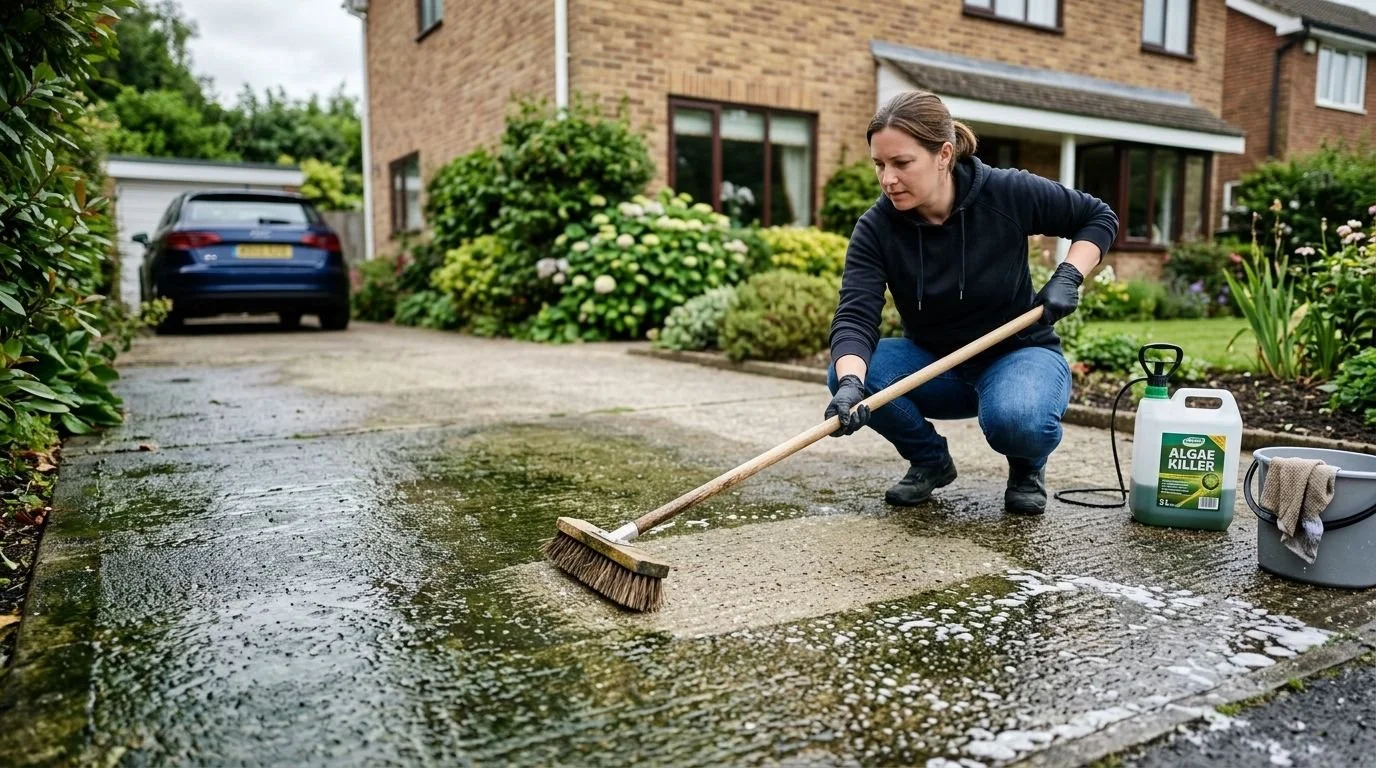
You can strip light algae off a driveway without a pressure washer: diluted bleach or vinegar, a stiff broom, and two or three passes over one to two weeks.
DIY only lifts surface growth. On porous or unsealed concrete it is often back in six to eight weeks unless you seal the face or book a professional clean.
Diluted bleach (1 part bleach to 3 parts water) kills algae without a washer, but needs two or three treatments
White vinegar is the gentler, pet-friendlier option on a light film
Commercial biocide sprays need no scrub and take two to four weeks to clear
Unsealed concrete regrows fast — sealing after a clean is what slows it
Clear Jet is the faster reset when DIY stops keeping up across Canberra and the ACT
Why this matters
Canberra’s cool, damp shoulder seasons are what algae wants: shade, moisture, a rough face to grip. A driveway under trees or on a south slope grows it back faster than a full-sun slab, no matter how hard you scrub.
DIY is fine on light growth and better when you have pets, beds or a drain nearby. The cost is time. A pressure clean lifts the same growth in one pass. Manual methods need patience and another look within a month.
Three methods without a machine
Pick by how thick the growth is and what sits next to the concrete.
Diluted bleach — heavy, established algae. Stiff broom. Same day, again in seven days.
White vinegar — light film, pets and plants. Light scrub. Same day, again in five to seven days.
Commercial biocide — large drive, low effort. No scrub. Two to four weeks to clear.
Steps that stay the same
Sweep leaves and grit. Algae feeds on what sits under it.
Spray in sections, not the whole drive at once.
Dwell 15–20 minutes for bleach or vinegar, or the full label time on a biocide.
Scrub with a stiff broom along the grain, not in circles.
Rinse with a hose. Household water is far weaker than a washer, so rinse longer.
Repeat in five to seven days if green or black is still there.
Bleach
One part household bleach to three parts water, pump sprayer. Fast on spores. It will bleach lawn, borders and coloured pavers if it runs. Best on a heavy drive with no beds tight to the edge. Skip it near veg or a septic.
Vinegar
Undiluted white vinegar. Slower on thick growth. Usually a second pass in a week. Won’t knock plants or coloured concrete the way bleach can. Weak on months-old growth — plan on three treatments.
Biocide
Sits and works. Rain and time over two to four weeks. Good when you will not scrub. Heavy growth may need a second coat.
Why it comes back
Trees and shade keep the slab damp
South faces dry slower in Canberra
Low spots that pond after rain
Porous, unsealed concrete — spores root in the face
Leaves and clippings left on the slab
Sand joints on pavers hold water longer than a solid slab
When DIY cannot hold it, a pressure clean resets the pores before you reseal. That is the job Clear Jet does on driveways, pavers and roofs across Canberra and the ACT.
GET A FREE QUOTE
https://www.clearjet.com.au/#quote
Does vinegar last?
No single pass is permanent. Kill the film, then treat again until it stays clear for two weeks. After that it is seasonal maintenance.
Is bleach safe on the drive?
Diluted 1:3 is fine on bare concrete. Not on anything green beside it. Keep run-off off stormwater. Rinse after you scrub.
DIY vs a pressure clean
DIY often holds two to three months. A professional clean plus a sealer often holds longer because the wash reaches the pores where spores live.
FAQ
How do you do it without a washer?
Bleach 1:3 or vinegar, dwell 15–20 minutes, stiff broom, rinse. Repeat every five to seven days until it stays clear for two weeks.
What kills it more naturally?
White vinegar. Slower than bleach. Two or three passes on thick growth.
Baking soda?
Small spots only. Not a whole driveway.
How often?
Shaded or south sections every two to three months in the damp months. Less on full sun.
Can untreated algae damage the drive?
It gets slippery and holds moisture that chews the face over Canberra winters.
Is a pressure clean better?
For recurring, heavy growth, yes. It reaches deeper than a broom.
Fastest no-machine method?
Diluted bleach and a stiff broom, same day.
One last thing
Most people treat the algae and skip the sealer, then watch it return in two months. Sealing after a clean — DIY or professional — is what closes the pores. Treatment alone only resets the clock.
GET A FREE QUOTE
https://www.clearjet.com.au/#quote
