
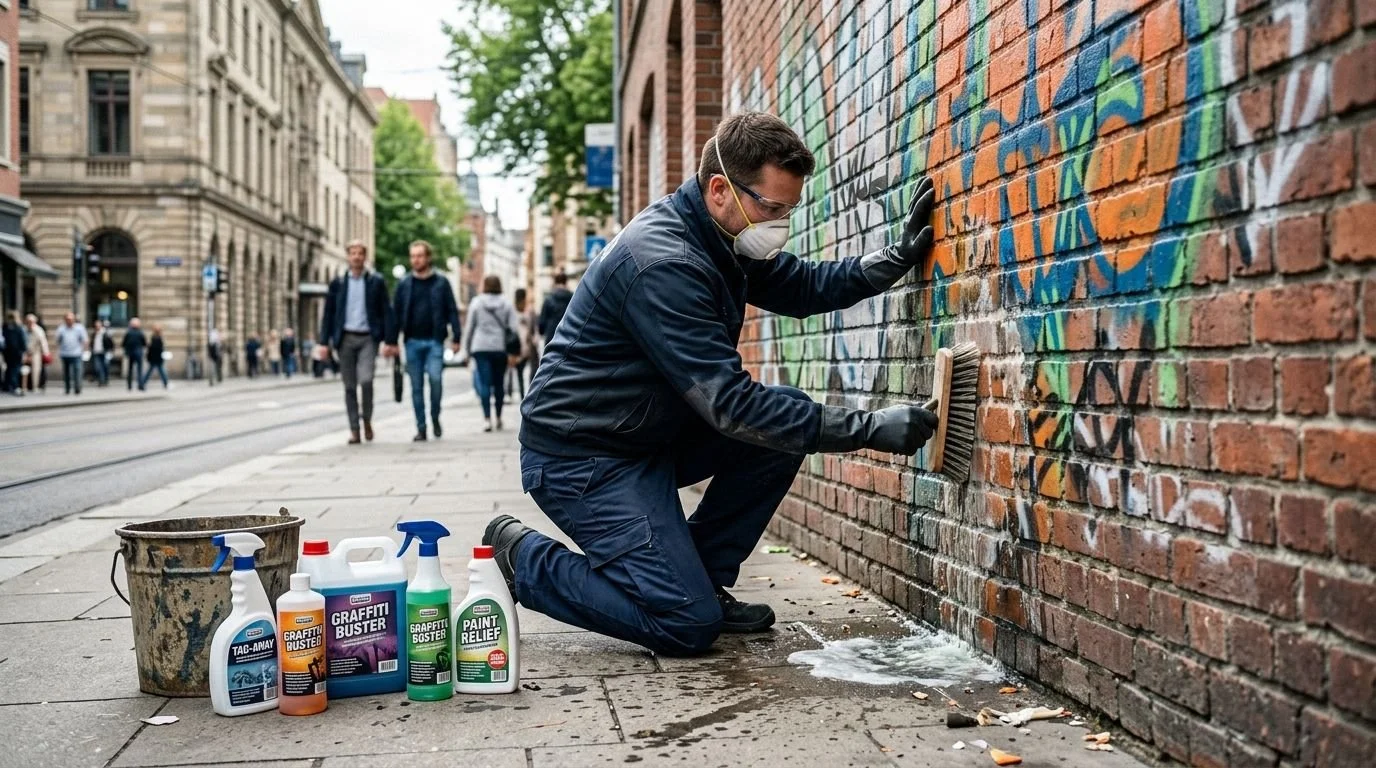
Graffiti removal in Canberra comes down to one decision: which product or method lifts spray paint, marker and ink off the surface without damaging what is underneath.
This guide ranks six approaches that work in 2026, from DIY sprays and gels to professional pressure cleaning, so you pick the right one the first time instead of scrubbing a stain deeper into the render.
Best overall: professional pressure cleaning through a service like Clear Jet. That covers the widest range of Canberra surfaces without stripping paint, etching sandstone or sending run-off into stormwater.
Best for DIY metal and glass: solvent-based gel remover
Best for sites near waterways: citrus-based biodegradable remover
Best for large commercial walls: hot-water pressure washing
Best budget option: all-purpose degreaser and a stiff brush
Best for repeat-offender sites: anti-graffiti protective coating
Why this matters
A gel that lifts paint off Colorbond can eat sandstone or leave a pale patch on painted render. Chemical run-off into stormwater is regulated in the ACT. You cannot tip every solvent down the gutter.
Surface, age of the paint, and how often the spot is re-tagged change which method makes sense. Get that wrong and you either waste product or pay to fix the “fix.”
What makes a method work
Surface compatibility — render, sandstone, Colorbond and glass do not take the same solvent
Paint chemistry — enamel, acrylic and marker need different breakdown
Stormwater rules — disposal is regulated on driveways and footpaths in the ACT
Damage risk — etching, fading or a pressure setting that is too hard
Turnaround — how fast it lifts versus how many passes it needs
Repeat cost — remove once, or coat so the next tag wipes off
At a glance
Professional pressure cleaning — brick, render, sandstone, heritage. Pressure and heat matched to the surface. Needs a booking.
Solvent gel — spray paint on metal and glass. Clings on vertical faces. Fumes, ventilation required.
Citrus biodegradable remover — sites near waterways. Slower. Often two or three applications on cured paint.
Hot-water pressure systems — large commercial walls and underpasses. Needs commercial gear.
Degreaser and brush — small fresh tags, budget DIY. Only works on fresh, unsealed paint.
Anti-graffiti coating — repeat-offender walls. Future tags wipe off. Does not remove what is already there.
1. Professional pressure cleaning — brick, render and sandstone
Canberra has a lot of exposed brick, painted render and sandstone. Those surfaces punish the wrong chemical and the wrong pressure.
Clear Jet matches water pressure and temperature to the surface and captures run-off so it does not go into stormwater.
Pros
No etching or bleach risk on porous surfaces when pressure and heat are matched
Brick, render, fence, pavers in one visit
Wastewater handled under ACT rules
Works on fresh tags and paint that has sat for weeks
Cons
Costs more than a hardware-store can
Needs a booking, not a same-hour DIY fix
Overkill for one tiny tag you can scrub yourself
Best for: brick, render, sandstone and heritage work where damage risk beats a cheap can.
GET A FREE QUOTE
https://www.clearjet.com.au/#quote
2. Solvent-based gel — metal and glass
Gels cling to Colorbond, garage doors, signage and glass. They dissolve acrylic and enamel instead of running off the face.
Pros: fast on small jobs, no pump needed.
Cons: fumes, gloves, ventilation. Some powder-coat can discolour. Do not rinse untreated into ACT stormwater.
Best for: letterboxes, fences, signs, isolated non-porous jobs.
3. Citrus biodegradable remover — near waterways
D-limonene citrus solvents carry a lower chemical load than industrial strippers. Better when the block backs onto a creek or the run-off path is short.
Pros: lower toxicity, gardens and pets, works on some porous and non-porous faces.
Cons: slower dwell, cured tags often need two or three passes, dearer per litre.
Best for: waterway-adjacent homes.
4. Hot-water pressure systems — large commercial walls
Commercial hot-water units strip large masonry and concrete faster than a gel. That is what councils use on underpasses and precinct walls.
Pros: area per hour, aged or multi-layer tags, pairs with a citrus pre-treat.
Cons: gear cost and weight. Needs an operator who will not scar the face.
Best for: commercial walls, underpasses, long fence lines. Skip for one house tag.
5. Degreaser and brush — small fresh tags
A shed degreaser and a stiff brush will lift fresh, unsealed spray off smooth timber or a bin if you catch it within a day or two.
Pros: cheapest, already in the shed.
Cons: dead on paint older than a couple of days. No use on brick or render. Scrubbing wears paint.
Best for: same-day tags on smooth, non-porous faces. Skip anything older than 48 hours or on brick.
6. Anti-graffiti coating — sites that get hit again
A sacrificial or permanent coat over a wall that is tagged more than once means the next spray wipes off with water.
Pros: cuts the next removal, protects heritage faces from another chemical round.
Cons: does not remove what is already there. Needs a clean first. Reapply every few years.
Best for: walls and fences tagged more than once.
How to choose
For most Canberra brick, render, sandstone or heritage faces, professional pressure cleaning is the default in 2026. Keep a solvent gel for fresh metal or glass between visits. Use citrus if you back onto a waterway. Coat the wall once it has been hit twice.
FAQ
What is safest on brick and render?
Professional pressure cleaning. One solvent on every face is how render gets bleached.
Is pressure washing safe on sandstone?
Yes when pressure and temperature are matched to the stone. Untrained high pressure can pit it.
Can I do it with household products?
Degreaser and a brush will lift fresh spray off smooth non-porous faces within a day or two. Not cured paint. Not brick or render.
Do coatings stop taggers?
No. They make the next tag wipe off. Worth it after the second hit.
Can I rinse chemical remover into ACT stormwater?
Untreated solvent run-off on driveways and paths is not compliant. A professional job captures the water.
How long does a coating last?
Usually a few years, depending on sun and surface. It does not remove graffiti already on the wall.
Solvent gel vs citrus?
Gels are faster on metal and glass, stronger fumes, tighter disposal rules. Citrus is milder and slower on cured paint.
How much does professional graffiti removal cost in Canberra?
It depends on area, surface and how long the paint has sat. Quote first — no flat rate on this site.
One last thing
Speed beats product choice. Paint left on a sun wall for more than a couple of days starts curing into the face. After weeks, book the clean. A gel is more likely to smear it than lift it.
GET A FREE QUOTE
https://www.clearjet.com.au/#quote
